intraspace: the review lounge

Friday, July 27, 2007

velvet elvis

velvet elvis, by rob bell

i got this book along with 'blue like jazz' from mal and hazel for my birthday. i liked both books, but in a battle between 'blue like jazz' and 'velvet elvis', i appoint 'velvet elvis' the victor.

both books have a similar aim: the subtitle of 'blue like jazz' is "nonreligious thoughts on christian spirituality", 'velvet elvis' is subtitled "repainting the christian faith". in a world where 'christianity' seems to be becoming less popular as it is besmirched by parting ways with the culture of the day and the actions and words of unwise spokespeople, along with a healthy smattering of prejudice and media spin, books like these that try to get back to the essential core of christianity become increasingly important.

rob bell does an excellent, if not slightly controversial, job of refiguring christianity. he expects, and invites, controversy as a way of engaging with the big issues. i found that i warmed to his book more as it went along.

the man has a gift for communicating his ideas and it is easy to see why his 'mars hill' church has grown so quickly. he says things which at first seem controversial, but underneath this surface there emerges a brand of christianity that is actually quite orthodox. i guess i am going to cop out a little and not discuss any of his ideas in detail - it would be difficult to pinpoint one example in particular because the book is so wide ranging.

'velvet elvis' is nicely presented - interesting design, with ideas delivered in short paragraphs and one-liners.

so i recommend it as a way of looking at christianity that avoids a lot of negative baggage. by the end, i found 'velvet elvis' to be one of those books that you feel disappointed about finishing.

highly recommended.

warandpeace-o-meter: 785/981 (volIII, bookXII, chapXIV)

Labels: , , , , ,

Thursday, June 28, 2007

God is here

God is here, by steve case

i've been a fan of 'the practice of the presence of God' by brother lawrence for about 7 years or so since i read it. it was, without doubt, a book that changed my life. the main idea i got from it (and the one that stays with me) is the concept that God is there continuously - it's just a matter of recognising that fact. we tend to see moments of our heightened awareness of his presence as being the only moments when he is there. in actual fact these moments are simply instances when our senses were turned on to his proximity. he is there all the time.

steve case's 'God is here' is a book that attempts to apply and explain brother lawrence's ideas for a contemporary audience. brother lawrence lived in the 1600s, so you can see why someone might think that his writing needs some interpretation in the 2000s.

anyway, because of my feelings about 'the practice of the presence of God' i approached this book with a couple of thoughts - 1. "this should be good, because it is about such a great book" and 2. "this better be good - the author better not get this wrong."

case does a reasonable job. as usual with american published books, i found myself frustrated with the american context - these books are written with the assumption that all the readers will be american - so we get endless references to 'krispy kream' donuts and such. let's talk about what i'd like to call the 'krispy kream factor'. this is about more than just an american cultural framework. i've noticed recently that christian authors in their anxiety to make their material culturally relevant, lessen the impact of their writing by constantly referring to banal illustrations. you end up with a kind of kitsch image of something profound - like comparing the kind of divine encounters recounted by brother lawrence to sitting on the backporch with a grande starbucks espresso and a box of krispy kreams on a sunday morning. american christian authors seem obsessed with coffee and donuts.

case is trying to apply the ideas in brother lawrence's book to my everyday life. but it doesn't always work because i was first impacted by the unmediated reading of the original (i didn't need anyone to explain it) and also because i don't really identify with the krispy kream factor.

that's my rave finished. all that being said, the book reminded me about brother lawrence and got me thinking about his stuff again. and some of the things that case pointed out were helpful to me.

and, i finished reading this book on the deck yesterday, in the sunshine - which was a blissful experience that proved a lot of what case was saying... enjoy the moments, know that God is there. and i did (without donuts and coffee).

warandpeace-o-meter: 669/981 (volIII, bookXI, chapI)

on the stereo 'to build a home' by the cinematic orchestra, from the album 'ma fleur'.

Labels: , , , ,

Friday, June 22, 2007

Leadership Excellence

Leadership Excellence by Phil Pringle

Having heard Phil Pringle preach and teach on numerous occasions I decided it was time to read one of his books. As I am currently trying to develop my leadership skills this seemed like the right title to start on.

I was really captivated by the first two chapters of this book, rather then giving me laws and principles of leadership it was hammering home the heart and character of the leader. This really challenged me on a personal level and led to some healthy self examination.

The rest of the book was very helpful, mixing leadership principles and character development. Overall it provided some good tips, pitfalls to avoid and some very sound biblical teaching on leadership.

One criticism is that the book is a little bit too long(276 pages). At times he repeated himself and also used too many motivational stories. It could have easily been condensed without losing its effectiveness.

However often the key with books like this is not trying to process the whole book but to pick up one or two key ideas that fit into where you are at and work on implementing them. So on that front it certainly succeeded in giving me the next step in leadership development

In closing here are a few quotes I enjoyed from the book

"When people join our church, we tell them they are now members of a house, not a hotel"

"The scripture tells us that 'Lot.... chose for himself. This will always be a poor decision"

"Sometime we want some thing more than the will of God. We are clever at cloaking this desire with the line 'God told me'

Labels: , , , ,

Saturday, May 19, 2007

modern art and the death of a culture

modern art and the death of a culture, by h.r. rookmaaker

looking on the title page of my copy of this book, i see i have dated it 1998 - which means that it's taken me almost 10 years to get around to reading it. the daunting and critical-sounding title made me wonder if i wanted to. i'm glad i did.

the field of christianity and the arts is beginning to grow these days (both academically and in practice), but 30 years ago most christians didn't want to touch modern art with a ten-foot barge pole. into that gap stepped francis schaeffer and his friend hans rookmaaker (a jazz critic and art historian). 'modern art and the death of a culture' was rookmaaker's major work in this area, and the lack of other writing by christians on this subject at the time makes his book a seminal masterpiece.

the book was published in 1970, just as modern art was climaxing - by that year, virtually everything that you could do in art (barring technilogical developments) had been done. this of course included some extreme and freaky work, but even at the less extreme end, people (especially the majority of christians) found contemporary art to be distasteful and abhorrent - many of them were still 'coming to terms' with modern art that had come out in 1910 (some of them still are).

rookmaaker's masterstroke was engaging with the art world rather than condemning it. in this book he heavily critiques modern art, but he mines out what he believes is essentially at the heart of the apparent destructiveness of it - a sense of loss and despair. and again, rather than condemning this fact, rookmaaker examines that this is the natural result of the process of humanism and the enlightenment. and so, he says, modern art accurately represents where western society has come to as a result of the enlightenment framework. he doesn't dislike modern art at all - he simply wants it to have more hope and beauty.

he argues that bourgeois niceness is not the answer - it is equally as bad, if not worse, than the negative elements of modern art. instead he challenges christians to meet the modern world where it is, and offer alternatives.

there is so much in this book, that i couldn't possibly summarise it all here - in fact what i have just written is really only my take on what rookmaaker is saying.

for me, what i found interesting was examining rookmaaker's predictions about the future as he saw it in 1970. i'm not an expert in this, but i think some of rookmaaker's predictions have come true, and on the other hand, i feel that the art world has stepped back from the precipice it was on the edge of in 1970. the main reason is that there is nothingness over the edge. and so the art world has struck camp 100 metres or so from the edge, and stretches back from there. if this is true, then we can see what modern art accomplished as being a true revolution, complete with violence and harm but in the end creating significant freedom.

the other great thing about the book is the challenge it lays down for christians - the challenge, as i have said, not to retreat into bourgeois niceness but to get out there and engage. i believe there is now a definite christian arts movement under way - i can see it gathering momentum even since the late 90s when i was at university - and i think rookmaaker would have approved. but his challenge still rings true and relevant.

for it's on-going relevancy and its historical importance, i think 'modern art and the death of a culture' should forever remain a crucial text in the tradition of christian cultural study and practice.

highly recommended.

on the headphones: 'attack el robot! attack!' by calexico, from the album 'feast of wire'.

warandpeace-o-meter: 553/981 (volII, bookX, chapI)


Labels: , , , , , , ,

Wednesday, April 18, 2007

the importance of being foolish

the importance of being foolish, by brennan manning

this is a book i found sitting on a table at my mum's house and decided to take with me.

brennan manning is a franciscan priest best known for his book 'the ragamuffin gospel' (which i also have in my possession - review sometime in the future). faced with the choice of reading this book and 'the ragamuffin gospel', i decided to read this one because i like the cover design...

in the event, it turned out to be one of the most impacting christian books i've ever read.

manning begins by emphasising the toughness of the christian calling - as found principally in jesus' sermon on the mount. he notes that christianity has watered down the magnitude of what jesus has called his followers to. his point is that although jesus' teaching is a hard teaching, we should nevertheless still aim to fulfill what jesus has called us to, rather than making excuses for it.

manning goes on to describe the way in which western society is addicted to security, pleasure and power. he describes western christians as 'schizophrenic', and says that we have become expert at sharing ourselves between material concerns and our spiritual calling, rather than letting our spiritual calling consume every area of our lives. serving two masters, he says, leads to anxiety and stress as we are pulled in two directions, constantly trying to cater for both masters.

the antidote for all this, says manning, is an awareness of God's love and an understanding of the cross and resurrection.

when you condense manning's message down like i have here, it sounds a bit confrontational and judgmental, but he has a peculiar knack for being able to deliver straight truths compassionately (a character trait that he has no doubt learned from jesus).

the title - 'the importance of being foolish' - is a little misleading at first. this book is a rewrite of an earlier volume called 'gentle revolutionaries' - which, i think, is probably a more accurate title. there are a lot of verses in the bible that make it clear that foolishness is not really the way to go. but the 'foolishness' that manning refers to is the variety found in 1 Corinthians 1:22-24: "Jews demand miraculous signs and Greeks look for wisdom, but we preach Christ crucified: a stumbling block to Jews and foolishness to Gentiles, but to those whom God has called, both Jews and Greeks, Christ is the power of God and the wisdom of God." it is what manning calls "resurrection wisdom" - an inverted kind of wisdom that doesn't make sense unless there has been an experience of God's love and sacrifice.

protestants and pentecostals shouldn't be put off by the fact that this is a catholic author - manning is first and foremost a follower of jesus, and so his message is entirely biblical.

so all in all, an excellent and impacting book. for more info on brennan manning, go to www.brennanmanning.com. highly recommended.

warandpeace-o-meter: 391/981 (volII, bookVI, chapXXIV)

on the stereo: 'green grass of tunnel' by múm, from the album 'finally we are no one'. www.randomsummer.com

Labels: , , , ,

Tuesday, April 03, 2007

blue like jazz

blue like jazz, by donald miller

over the last few years, this book has become a bit of a 'classic' among 20-something christians (especially in the states). i got my copy from mal and hazel.

don miller is dedicated to cutting through the religious and cultural aspects of american christianity to find the heart of believing in jesus.

i have the feeling that in the american context this book would be hugely impacting and maybe controversial, and i would say that this is part of the reason it has sold so many copies. in new zealand it doesn't explode christian culture quite so much (because christian culture is different here), but it is full of great insights and thoughts.

don miller is very good at writing honestly - apparently saying exactly what he thinks. it is largely autobiographical (a kind of spiritual autobiography), but in it he manages to cover some of the main aspects of christianity and get the reader thinking. it appears that his original aim was to write something for non-christians so that he could offer christian spirituality without the unnecessary trappings of religion. but i found that it also stimulated me to think from different perspectives - not just accept the status quo.

definitely recommended.


Labels: , , , ,

Sunday, March 18, 2007

silence

silence, by shusaku endo

this was a novel i was inspired to read by reading about it in philip yancey's book 'soul survivor'. i got this copy from mum for christmas.

endo has been called 'japan's foremost novelist' and 'silence' (first published in 1969) has been called 'one of the finest novels of our time' by graham greene. endo is a catholic christian, and much of his work deals with the tension between his catholicism/christianity and his japanese culture. in japan, christianity is viewed as a foreigner's religion, but when endo went abroad, he found that he didn't fit into the western world either. so that's a bit of back story on endo.

this is a historical novel set in the time of the missionary endeavours that were undertaken by europe into japan in the 1600s. the samurai class became increasingly alarmed with the effect that christianity was having on traditional japanese society, and outlawed all western mission work. widespread persecution broke out against japanese christians who were tortured for their faith and forced to renounce or be killed.

the main character of this book, rodrigues - a portuguese missionary brother - is sent to japan to carry out christian work despite the new persecution and the fact that others who have gone before him have disappeared and are rumoured to have apostatised...

the samurai force christians to renounce their faith by placing their foot on a picture of christ. this is the position that rodrigues is put in when he is captured. the novel hinges on the ethical dilemma and crisis of faith that he faces about whether to recant, and thereby save the japanese peasants that are being tortured for his sake, or to hold fast to his faith and die a martyr's death.

an excellent and heart-wrenching book.


Labels: , , , , ,

Wednesday, January 03, 2007

taming the tiger

taming the tiger, by tony anthony

as far as dramatic christian stories about conversion go, this would have to be near perfect in terms of the formula: really bad person (in this case, a kung fu expert who uses his skills to maim and kill people for money and retribution) goes to prison and then finds jesus.

i don't mean to come across as cynical in this - 'taming the tiger' really does have all the ingredients of a storming good christian story of redemption. truth betters fiction in a number of episodes in the book. we get to hear all about tony's rigorous training in china as a child, rising to be become a world kung fu champion, then a bodyguard, losing the love of his life and becoming angry. using his abilities in the service of the underbelly of the world. before the cypriot police catch up with him and throw him into one of the worst prisons of the world. he becomes a christian there and returns to england (where he was born). he gets married to a nice christian girl and then winds up in prison again after accidentally killing a woman in a road accident. that stint in prison gives him a chance for more self-examination, not to mention an opportunity to demonstrate good overcoming evil in the prison environment.

potentially open to criticism for being sensationalist (for the writing style as much as the content), 'taming the tiger' is well worth a read - very entertaining and easy reading.


Labels: , , , ,

Saturday, October 28, 2006

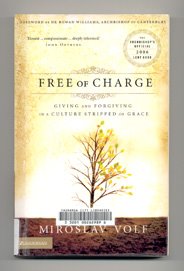
free of charge

free of charge, by miroslav volf

this is a book that i randomly picked up after anna brought it home from the library. looked pretty interesting and was the archbishop of canterbury's official lent 2006 book - who could resist?...

miroslav volf is apparently a fairly well-known theologian who teaches at yale. this book covers the twin themes of giving and forgiving. the thing that struck me most in the book was volf's description of the common ways that people view God. with regard to giving, people often see God as either a negotiator or santa claus. ie, they either see God as someone you can strike a deal with in order to get what you want, or they see him as someone who just gives stuff willy-nilly. with regard to forgiving, people tend to see God as either an implacable judge, or as a doting grandparent.

that's a pretty good observation i think, and volf goes on to explain what the true God is really like. bearing in mind that this is a book by a theologian, it is quite long-winded and volf likes to answer any question that might arise. but apart from the rigor of that for the casual reader, there is a lot of stuff to pick up on, and it is nicely carried by examples and illustrations, so is not too difficult to read.

here's a good quote summing up the point of book, and the argument that volf makes for a God that defies most people's perception of him:

"You can sum up where we've landed in four simple sentences. The world is sinful. That's why God doesn't affirm it indiscriminately [like santa claus or a doting grandparent]. God loves the world. That's why God doesn't punish it in justice [like a negotiator or implacable judge]. What does God do with this double bind? God forgives."

Labels: , , ,

Sunday, October 15, 2006

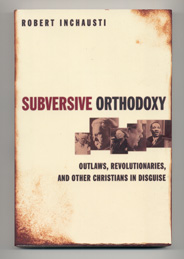
subversive orthodoxy

subversive orthodoxy, by robert inchausti

this book made quite a big impact on me (as partly witnessed by this post on my other blog). it wasn't always easy to understand - and when you can't fully understand something it is hard to fully ascertain whether or not you completely agree. that sounds like it might have been a major problem, but there was enough in here that i really liked to be able to say that i liked the whole book.

so that's the review in a nutshell. now for some quotes. in this book inchausti talks about a brand of christian orthodoxy that works counter-culturally (as true christianity is want to do) and is spearheaded by what he calls "the orthodox avant-garde":

"cutting edge Christian thinkers who, merely by expressing the contemporary moral and intellectual implications of their faith, have exposed the dogmas of modernism in the light of a more inclusive and liberating Christian vision of reality."

"not about new religious values so much as it is about the eternal freshness of the old ones. most of the thinkers examined here are religious traditionalists whose ideas challenge the assumptions of their secular colleagues. most are also important innovators in their respective fields, alert to contemporary circumstances, aware of changes in their disciplines, critical of dominant narratives, and yet still capable of drawing connections between their faith and the realities of the modern world ... each of them does far more than simply say 'no' to modernism; they bridge the chasm between our longings for spiritual completion and the technoscientific world within which we live."

on the headphones: 'nautilus' by loscil, from the album 'submers'. http://www.loscil.com/


Labels: , , , , ,

Saturday, August 12, 2006

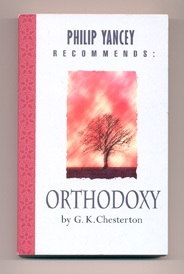
orthodoxy

orthodoxy, by g.k. chesterton

if you've seen my other blog, you might have noticed that i've been harping on about g.k. chesterton recently. i've finally finished reading his book 'orthodoxy'. it looks little, like a quick read, and then it isn't.

this book seems to have had a revival in the last couple of years. it's recommended by philip yancey (as you will see from the cover of my copy), john eldridge mentions it a lot in his writings, and relevant media (purveyors of christian cool) have just released a version under their imprint. i suppose it was also considered a 'christian classic' before this recent press - i've heard that it was instrumental in bringing c.s. lewis to faith.

the book was first published in 1908. there are aspects of it that seem a bit dated in 2006 (his examples more than his arguments). i found it a bit hard to get into for the first couple of chapters, but it took off after that. there were certain passages that were that kind where you stop reading for a couple of minutes because they are so powerful and they take some processing.

while chesterton's arguments are often quite compelling, i found it just as useful for stimulating my own thoughts and ideas. the book is in the same category as writing by c.s. lewis if that's your cup of tea.

on the stereo: 'everyday should be a holiday' by the dandy warhols, from the album 'come down'. www.dandywarhols.com


Labels: , , , , ,

Thursday, June 08, 2006

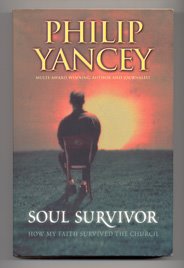
soul survivor

soul survivor, by philip yancey

this is not my first review of a philip yancey book, and i have to say that they are all pretty solid. but the two i have reviewed on intraspace so far - the jesus i never knew and this one - would have to be my favourites.

i would seriously recommend this book to anyone who was jaded with christianity or anyone who thought they knew what christianity was about but hasn't gone in for it.

the book is subtitled "how my christianity survived the church" but that isn't really the theme of the book. instead yancey writes about the people who influenced his life and saved his faith (he started out life as a racist fundamentalist in the southern states) - everyone from martin luther king to dostoevsky. he writes a chapter on each of 12 different people.

yeah, so that's about the sum. i found it pretty absorbing and definitely want to check out more about some of the people he talks about. highly recommended.

on the headphones: 'anyway' by telepopmusik, from the album 'angel milk'.


Labels: , , , ,

Wednesday, April 26, 2006

the screwtape letters

the screwtape letters, by cs lewis

cs lewis strikes again! not that i should be surprised, he is widely regarded as one of the best christian writers of the 20th century.

this book is the record of letters sent by senior demon screwtape to his nephew wormwood. wormwood is on assignment trying to turn a new christian away from God. the more experienced screwtape gives advice to the young demon. this in turn gives us an insight into the way humans are deceived and tempted.

it's astonishing when you take stock of lewis's total literary output to realise just what a genius this man was. he has left an indelible mark on christian thought quite possibly for all time. he was a man of incredible intelligence and insight.

and so, true to form, this book is really brilliant. and, unlike some of his books, easy to read. not least of all because of the subplot of the human subject that screwtape and wormwood are trying so hard to mislead. you get to know not just the demons' methods but also some of the character and backstory of the man. the individual letters are short and interesting, and perception altering.

i'll add this to my list of crucial christian books.

on the headphones: 'everyday' by the cinematic orchestra, from the album 'every day'. http://www.cinematicorchestra.com/

Labels: , , , , ,

Tuesday, April 25, 2006

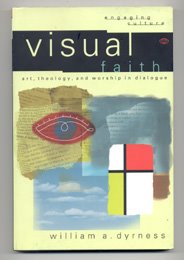
visual faith

visual faith: art, theology and worship in dialogue, by william a dyrness

three or four years ago there weren't a lot of books around about christianity and the arts. since my university days i'd been obsessed with the idea of a re-emergent arts movement in the church and it seems i wasn't the only one. in the last couple of years, a noticeable movement has indeed begun to take place. alongside that are an increasing number of books on the subject.

but i got this book when there weren't so many, and i aimed to get anything that came out. the rather drab title and the awful cover design put me off reading it for a long time - even the author's name sounds like "dryness".

finally, three years after buying the book, i finished reading it. and it turned out to be an excellent piece of writing.

dyrness begins by giving a historical survey of art and the church (interesting), talks about art in the bible (interesting), gives some theological perspectives (difficult), then talks about the challenges and opportunities for christians in the arts today (excellent). all up, a very good survey of the issues.

dyrness challenges protestant churches to pick up visual creativity and shows that it doesn't have to be at the expense of 'the word'. recommended reading for anyone who is interested in the application of visual media in the church.

on the headphones: 'all the time' by starflyer 59, from the album 'the fashion focus'. http://www.sf59.com/

Labels: , , , , ,

Tuesday, January 10, 2006

the jesus i never knew

the jesus i never knew, by philip yancey

this is a book i've been meaning to read for ages (probably nearly 10 years). at christmas i grabbed it off mum's bookshelf.

i'm glad i did - i'd put this book in the top 10 christian books i've ever read. yancey sets out to view jesus objectively, using the gospels themselves as his only source of information. weighed down by the baggage of a christian upbringing, this is a necessary quest but also a difficult one. how do you rid yourself of pre-conceptions?

in the event, yancey succeeds. he not only made fresh discoveries himself but succeeds in conveying these to the reader, meaning that i, too, got a fresh perspective on this revolutionary figure and saviour, jesus christ.

from a literary perspective, i believe that yancey is probably the best writer that the christian world has to offer in this genre at present. he has always utilised an excellent writing style that incorporates a wide range of quotes from, at times, difficult sources. but he communicates everything in a way that doesn't alienate the reader and holds your attention.

highly recommended.

on the headphones: 'waltz' by craig armstrong, from the album 'as if to nothing'. http://www.craigarmstrong.com/


Labels: , , , ,